Progressive Overload: Why Your Workouts Should Not Change Every Week
Nov 15, 2026
by Jeremy Jones
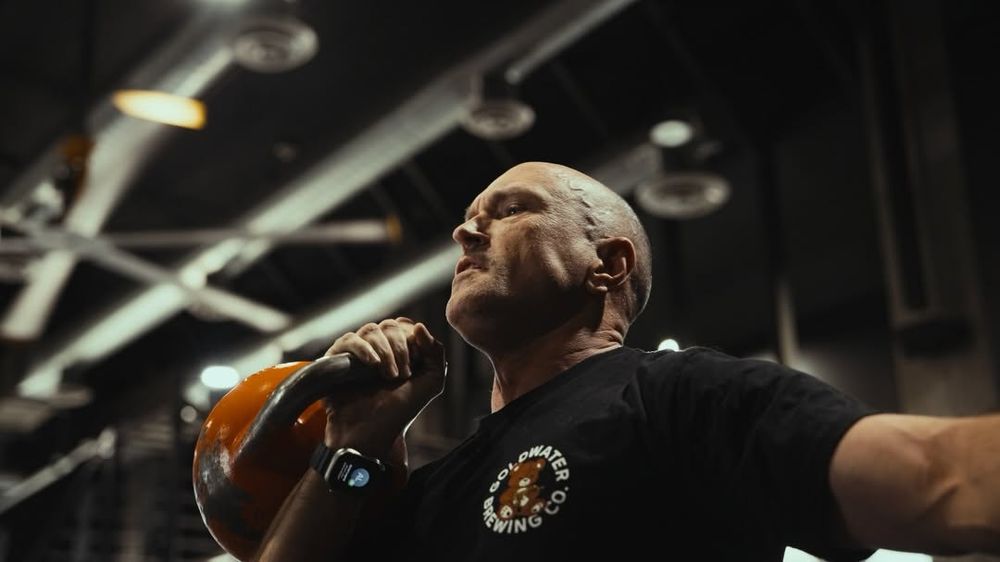
A completely different workout every time you enter the gym may feel exciting, but variety alone is not the same thing as progress.
If your goal is to become stronger, build muscle, improve your movement, or simply feel more capable, your training needs enough consistency for your body to adapt. Then, as you improve, the challenge needs to progress.
That is the basic idea behind progressive overload.
Progressive overload means gradually increasing an appropriate training demand as your body adapts. That increase might eventually involve more weight, but it can also mean completing more repetitions, improving technique, using a greater range of motion, or handling the same work with more control.
At The Collective in Gilbert, that principle is built into Strength and Conditioning at The Collective. Training moves through structured phases using progressive overload, purposeful repetition, and planned variation rather than replacing the entire workout every week.
Here is why that matters and how to recognize whether your training is actually moving forward. 💪
What Does Progressive Overload Actually Mean?
Your body adapts to the demands you repeatedly place on it.
If you are new to squatting and begin practicing the movement consistently, the same exercise that initially felt unfamiliar may eventually feel more controlled. A weight that once felt difficult can become manageable.
At that point, the program can gradually ask for more.
The 2026 American College of Sports Medicine position stand reviewed 137 systematic reviews representing more than 30,000 participants. It concluded that progressive resistance training improves outcomes including muscular strength, muscle size, power, muscular endurance, balance, and physical function.
Importantly, progressive does not mean maximal.
You do not need to increase the weight every session.
You need an appropriate challenge that evolves over time.
Why Repeating Exercises Can Be a Good Thing
People sometimes assume a workout has stopped being effective if they recognize the exercises.
In structured strength training, the opposite can be true.
Purposeful repetition gives you an opportunity to learn.
If you squat once and then never see the movement again for several weeks, it becomes difficult to determine whether your technique, strength, or confidence has improved.
If you revisit the movement within a structured program, you can compare.
Can you control the movement better?
Can you use slightly more resistance?
Can you complete another quality repetition?
Can you move through an appropriate range more confidently?
Those comparisons make progress visible.
The Collective describes its approach as training that builds through structured phases instead of starting over with random workouts every session. Foundational patterns include squats, hinges, presses, pulls, carries, and unilateral movements.
🔁 Repetition does not have to mean stagnation. Repetition with progression is how a skill develops.
Progressive Overload Is More Than Adding Weight
Adding weight is the easiest form of progression to see, but it is not the only one.
Consider someone learning a dumbbell split squat.
During the first session, balance may be the biggest challenge. Adding heavier dumbbells immediately would not necessarily represent better training.
A more appropriate progression might look like this:
Stage 1
Learn the movement with an appropriate load.
Stage 2
Perform the planned repetitions with better balance and control.
Stage 3
Complete the same work through a more consistent range of motion.
Stage 4
Add repetitions or another appropriate training demand.
Stage 5
Increase resistance when the current load no longer provides the intended challenge.
This is one reason coaching matters.
The best progression is not always the most obvious progression.
A recent randomized trial in untrained young women found greater muscle growth when resistance was progressively increased compared with keeping the same load and repetitions throughout the eight-week intervention. The study was short, involved one population and one exercise model, so it should not be treated as a universal formula. It does, however, add recent evidence supporting the broader principle that training demand needs to continue evolving as adaptation occurs.
Five Signs You Are Progressing Without Setting a Personal Record
A new personal best is satisfying, but it is only one way to measure progress.
Look for these signals too:
• The same weight feels more controlled
• Your technique remains consistent across more repetitions
• You can perform an exercise through a better comfortable range
• You recover more effectively between sets
• You understand the movement well enough to focus on effort instead of simply figuring out what to do
The Collective specifically recognizes progress through greater strength, better technique, increased capacity, greater confidence, and performance benchmarks over time.
That broader definition matters because fitness rarely progresses in a perfectly straight line.
Some weeks you will lift more.
Other weeks, the win may be executing the same session considerably better.
When Should You Increase the Challenge?
You do not need to force progression simply because another week has passed.
Before changing something, ask:
Can I complete the current work with appropriate technique?
If not, adding resistance may not be the best next step.
Does the exercise still provide the intended challenge?
If the planned work has become consistently easy, progression may be appropriate.
Am I recovering from my current training?
Progression only works when you can adapt to the work you are already doing.
Am I comparing several sessions rather than one unusually good or difficult day?
Sleep, nutrition, stress, and previous activity can all influence an individual workout.
Do I understand what the program is trying to develop?
The right change depends on whether the current goal is strength, muscle, muscular endurance, power, technique, or another quality.
This is where a coach can help distinguish productive progression from simply doing more.
What Progressive Programming Looks Like at The Collective
The current Strength Training experience uses separate lower and upper body emphases across the training week.
Lower Strength emphasizes the legs, hips, glutes, and core. Upper Strength includes pressing, pulling, pushing, and posture-focused work. Coaches explain the movements and help members choose appropriate options for their level.
That structure gives members repeated exposure to important movement patterns while allowing the programming itself to develop.
The Collective describes the process in four stages:
First, establish a starting point.
Then build through progression.
Next, apply that strength through purposeful challenges such as carries, sleds, intervals, and hybrid work when appropriate.
Finally, measure what has changed.
This is different from trying to make every workout feel unpredictable.
The goal is not novelty.
The goal is adaptation.
Does Every Workout Need to Be Harder Than the Last?
No.
This is one of the most important misconceptions about progressive overload.
Your workout today does not have to beat your previous workout.
Progress should be evaluated across time.
The ACSM review also found that many complicated resistance training variables did not consistently produce better outcomes. For healthy adults, the larger message is that resistance training itself, appropriate progression, sufficient effort, and consistency matter enormously.
That means a lighter session is not automatically a bad session.
Repeating a load is not automatically failure.
And a coach asking you to focus on technique instead of adding weight is not holding you back.
Sometimes maintaining the right challenge is part of progressing intelligently. 🧠
How Long Should You Follow a Program Before Changing It?
There is no universal number of weeks that applies to every person or program.
Beginners may continue making progress with relatively simple programming for quite some time. More experienced lifters may need more deliberate adjustments to volume, intensity, exercise selection, or other variables.
The important distinction is between planned variation and random variation.
A program can change while still building on what came before.
That is exactly how The Collective describes its progressive programming model: purposeful repetition combined with appropriate changes in volume, intensity, and exercise selection.
If you are wondering how frequently training should fit into your overall schedule, How Often Should You Work Out to See Results That Actually Last provides a broader look at balancing training frequency and recovery.
Frequently Asked Questions
Do beginners need progressive overload?
Yes, but beginner progression often begins with learning. Better technique, greater confidence, and gradually handling more appropriate work are all meaningful forms of progression.
Do I have to track every workout?
You do not need to obsess over every number, but some way of recognizing what you have previously done makes progression easier to evaluate. In a coached program, programming and coach feedback can provide additional structure.
Should I add weight every week?
No. Add resistance when it is appropriate for the exercise, your technique, the intended training stimulus, and your current ability. Progress is rarely perfectly linear.
Can I make progress without lifting very heavy weights?
Yes. Resistance training can produce improvements across a range of loading approaches. Heavier loads tend to favor maximal strength development, while other training variables can be adjusted depending on the goal.
Stop Chasing Different. Start Building Better.
An effective strength program does not need to surprise you every day.
It needs to challenge you appropriately, give you enough consistency to improve, and evolve as your abilities change.
That is what progressive training is designed to do.
At The Collective in Gilbert, Strength and Conditioning combines structured programming with coaching so you know what you are working on, why you are doing it, and how it can progress.
If you want to experience that approach, explore your first Strength session at The Collective and start from the level that is right for you.
